





































Based on an analysis of across multiple time frames, I anticipate that the shifting positions of U.S. President Donald Trump regarding Iran have heightened indecision among traders, particularly those who prioritize macroeconomic factors during periods of uncertainty.
On Tuesday, Trump announced that Iran had made a significant energy-related concession to the United States, although he declined to provide specific details about the nature of the concession.
Speaking to reporters in the Oval Office, Trump said Iran offered the concession as a show of good faith during negotiations aimed at ending a 25-day conflict that has disrupted global markets.
“They gave us a present, and the present arrived today, and it was a very big present, worth a tremendous amount of money,” Trump said. “I am not going to tell you what that present is. It was a very significant prize, and they gave it to us. They said they were going to give it to us, which meant one thing to me: we’re dealing with the right people.”
Trump indicated the concession was related to the Strait of Hormuz, the oil transit waterway that the United States has struggled to keep open during the conflict.
On the other hand, President Trump said the United States was currently in negotiations with Iran to reach a deal to end hostilities, adding that Iranian officials wanted to reach an agreement, as Pakistan is willing to host talks between the United States and Iran, while he has deployed additional troops to the Middle East during the ongoing conflict.
I observed that gold futures are going through extensive indecisiveness as president Trump is trying to mould the grim situation since Iran has chocked the Strait of Hormuz, as one of the strong war tactics to jolt the nerves of American diplomatic tactics as Iran has already gone through the same excuse of diplomatic talks last time when Israel started bombing Iran, despite completion of two rounds of talks between the U.S. and Iranian diplomats.
Undoubtedly, President Trump is painting a rosy picture of the current situation, which looks like only an excuse to extend the time needed to deploy more troops near Iranian territory.
Investors reacted to reports that the United States had sent Iran a 15-point plan aimed at ending the war in the Middle East as President Trump said Washington was “in negotiations right now” with Iran, adding that Tehran was “talking sense” and appeared eager to strike a peace deal.
Undoubtedly, Trump had earlier described talks with Iran as “productive” earlier this week, although Iranian officials denied that any negotiations were taking place, highlighting continued uncertainty around the diplomatic outlook.
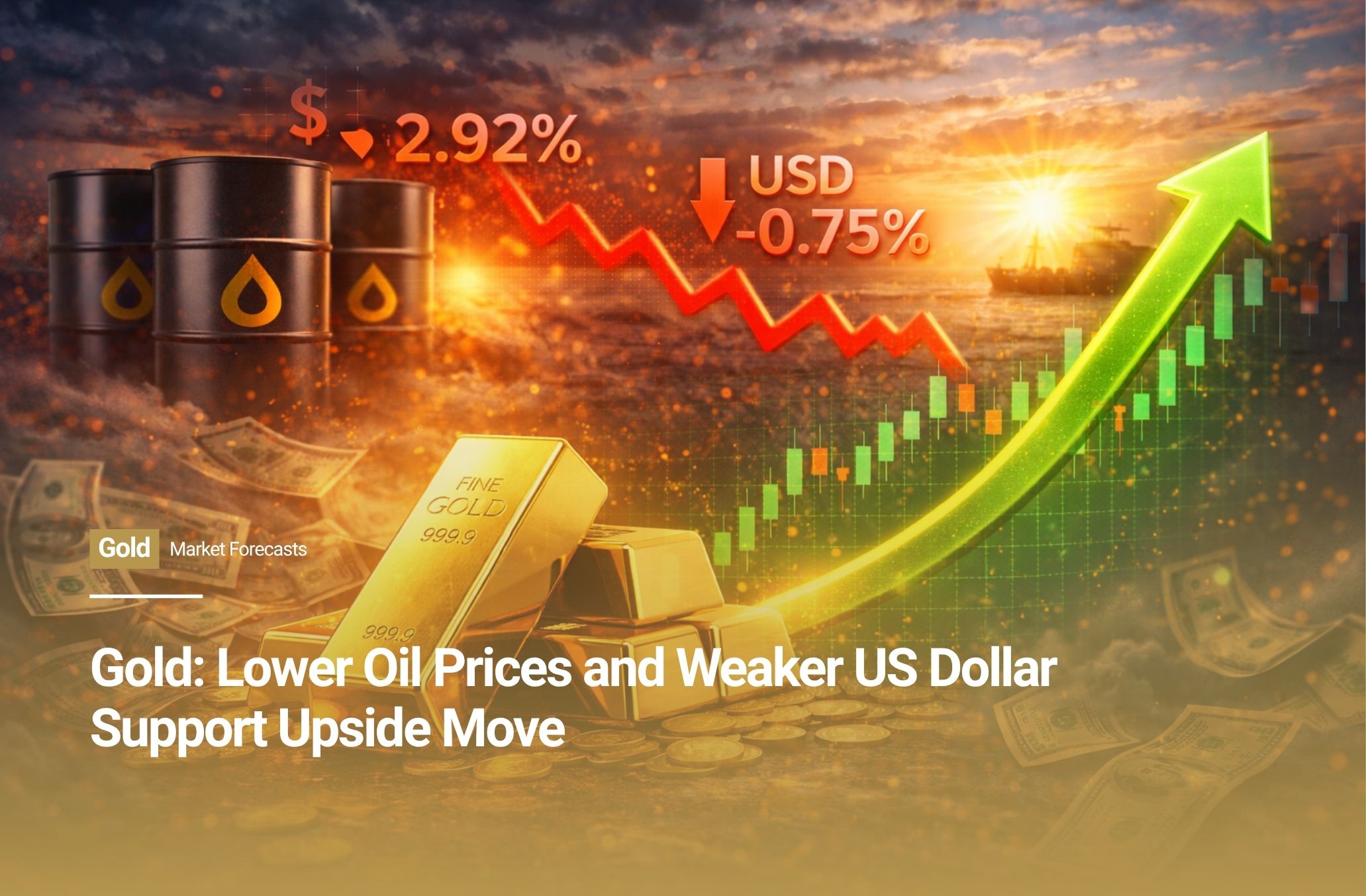
Oil prices, which had surged in previous sessions on supply disruption fears, slipped sharply on Wednesday, with Brent crude falling below $100 a barrel.
The decline in oil prices helped support gold by easing inflation expectations, which in turn reduced pressure on central banks to keep interest rates higher for longer.
On Wednesday, gold futures climbed over 3.31% in the Asian trading session, supposed by a drop in oil prices and a weaker U.S. dollar, as reports of a potential Middle East ceasefire reduced inflation concerns and boosted the yellow metal’s appeal.
While Turkey’s central bank is considering using part of its sizable gold stockpile to stabilize the Lira as the currency comes under renewed pressure from the war in Iran.
I observed that other central banks could also follow this move, due to surging stagflation fears since the escalation of this war, resulting in the sharp weakness of the global currencies of countries that followed panic buying in gold during the last few years.
Now, the changing scenario due to the impulsive risk of stagnant growth and surging inflation could force the global central banks to hold interest rates, while some of the central banks are even considering rate hikes, and the major steps from some of them could be selling a major chunk of their overloaded gold reserves this year.
Despite gold being seen as a safe-haven asset, the yellow metal has declined significantly since the onset of the conflict in the Middle East, as the spot price is currently trading around $4,380 mark, having fallen from around $5,419 on March 2, 2026.
I conclude that the sweet dream of de-escalation of war between the U.S. and Iran, as defined by the U.S. President, is still far away, as President Trump changes his mind unexpectedly, especially on weekends, which results in a gap-down or gap-up on Mondays. Let’s wait and watch till the gold futures find a breakout above or below the key levels, as I have discussed in my previous analyses.
Technical Levels to Watch

In a daily chart, gold futures, after opening at $4,580.60, tested the day’s high at $4,533.17, and day’s low at $4,565.26, are trading at $4,579, are showing extensive bearish pressure as trading below the significant resistance at the 100 EMA ($4,624.90), and have formed a bearish hammer, just above the immediate support at $4,557.52 where a breakdown could push the futures to test the next significant support at the 200 EMA ($4,93.99) this week as overhead formation of a bearish crossover by 9 EMA and 20 EMA, which have come below the 50 EMA could continue to extend selling pressure.
Disclaimer: Readers are advised to take any position in gold futures at their own risk, as this analysis is based only on observations.