




































Key Takeaways
The global gas system continues to operate with available supply across regions, yet flexibility is becoming increasingly constrained. LNG flows are adjusting through longer routes, tighter scheduling and greater dependence on execution, shifting the focus from volume availability to the efficiency of movement across the system.
markets are entering a phase where stability remains visible across benchmarks and storage dynamics, while the structure underneath is becoming more demanding.
LNG volumes continue to circulate and supply is present across regions. The constraint is shifting toward mobility across the system, shaping how efficiently gas can reach end markets.
This transition is visible in flow behaviour. Disruptions at key export nodes, combined with pressure across major shipping corridors, are extending routes and concentrating traffic into fewer reliable pathways.
Execution now requires greater precision, and timing has become a defining variable in maintaining balance.
Tightening emerges from this dynamic. It develops through logistics, routing constraints and timing sensitivity. The market remains supplied, and this condition is sustained through longer routes, higher freight exposure and a growing dependence on efficient execution.
LNG Flows Are Becoming Path-Dependent
LNG has historically acted as the balancing mechanism of the global gas system, allowing cargoes to move toward the highest value destination and smoothing regional imbalances.
That mechanism is still in place. It is now operating within a more constrained architecture.
Cargo allocation has become more competitive. Redirecting shipments requires longer lead times, higher freight costs and greater exposure to corridor risk. Each cargo carries more weight within the system because fewer alternatives are available at short notice.
The structure is evolving toward a path dependent network. Supply continues to reach end markets through a narrower set of viable routes, shaped by logistical friction and strategic positioning.
This shows up in behaviour. Flows remain active, and adjustments increasingly occur through timing and execution rather than optionality. Routing dependency is becoming a defining feature of the system.
The role of US LNG sits at the center of this adjustment. It continues to act as the marginal balancing supply for both Europe and Asia, absorbing shifts in demand and compensating for disruptions elsewhere. This function is being exercised in an environment where liquefaction capacity and logistical flexibility are already stretched.
Pricing Reflects Part of the Pressure
Benchmark gas prices are reacting to headlines, positioning and broader energy dynamics. They are only capturing part of the structural shift.
Price action has remained relatively contained despite rising tension in flows, while LNG-linked equities and shipping proxies show a more uneven response. The more informative signal is coming from the physical layer.
Freight rates, routing decisions and cargo concentration reveal a system that requires tighter execution to maintain equilibrium. This gap between physical signals and spot pricing reflects a market that is still adjusting to a different structural regime.
This dynamic expresses itself over time. Pricing reacts when stress becomes visible, while logistical strain builds internally through accumulated inefficiencies and delayed adjustments.
Technical Structure Reflects Compression
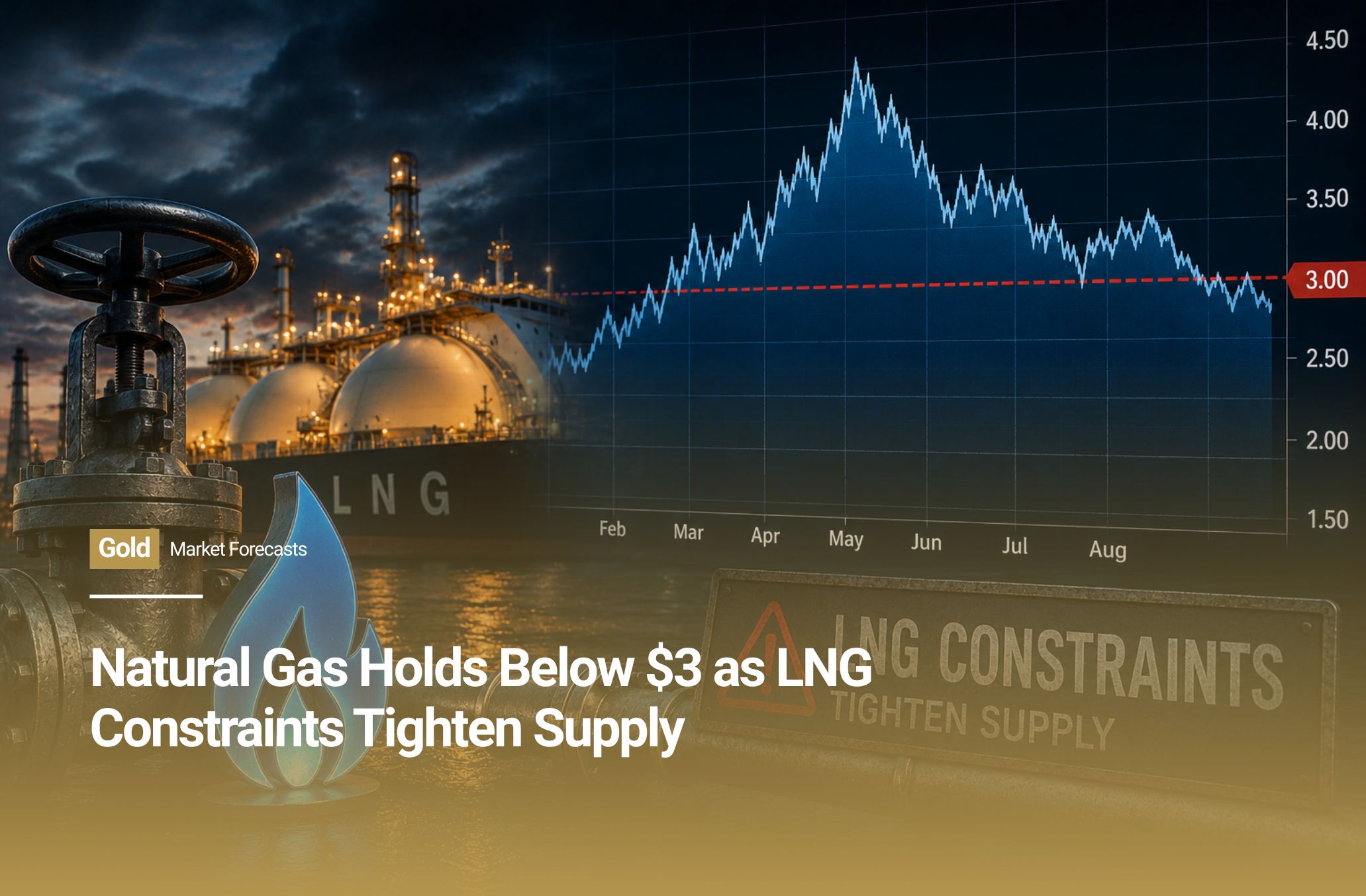
The chart aligns with this broader environment of structural tightening.
The 3.00 level defines the current regime pivot. Holding below it maintains a softer structure where upside attempts struggle to extend. A sustained move back above it would signal re-acceptance and a shift in regime.
The rejection around 3.12 defines the failed recovery zone. That level marks where the market attempted to rebuild structure and lost momentum, establishing a clear reference for supply.
Above, the 3.25–3.27 zone remains the upper boundary of the broader range. Acceptance in that area would be required to transition into a stronger structure.
At present, price is compressing between 2.90 and 2.95 while holding above 2.87. This range reflects pressure accumulation within a weakened structure. The sequence of lower highs continues to limit recovery and keeps the market contained.
Internal dynamics reinforce this reading. ECRO remains elevated in the high 50s while the delta stays negative, indicating stored energy without directional expansion. This configuration tends to resolve through directional release once compression reaches its limit.
The technical picture mirrors the physical one. Pressure is building inside a system that has not yet transitioned into a full directional move.
Europe and Asia Adjust Through Different Structures
Regional dynamics show how this tightening is transmitted across markets.
Europe remains highly dependent on steady LNG inflows to maintain storage levels and support seasonal demand. Procurement has become more competitive, and maintaining balance now involves tighter scheduling, higher freight sensitivity and reduced margin for disruption.
Asia operates with a more diversified demand structure. Taiwan has shifted procurement toward US and Australian supply following disruptions to Qatari flows, maintaining continuity while increasing reliance on stable maritime access. Natural gas continues to play a central role in power generation.
South Korea benefits from a broader energy mix that includes nuclear and coal, providing additional resilience. Its exposure to specific LNG sources is more balanced, while still embedded in a system where timing and routing constraints carry greater weight.
These differences shape how tightening conditions are absorbed across regions, influencing procurement behaviour and cost structures.
Industrial Spillovers Emerge Through Helium
The impact of tightening flows extends beyond gas markets into industrial supply chains.
Helium is produced as a byproduct of natural gas processing and plays a critical role in semiconductor manufacturing. Changes in LNG flows and gas processing dynamics affect helium availability through the same logistical channels.
This becomes visible at the industrial level. Semiconductor production relies on stable helium supply for cooling and controlled environments. As availability becomes less predictable, production systems adjust through higher costs, tighter inventory management and increased operational complexity.
Taiwan and South Korea have developed resilience through stockpiling, recycling and diversified sourcing. This stabilises output while increasing the cost of maintaining continuity.
The transmission runs from energy logistics into industrial cost structures, gradually feeding into broader supply chains.
Final Take
The global gas market remains supplied, and the structure supporting that supply is becoming more constrained.
LNG continues to move across regions through a system shaped by routing dependency, tighter execution and growing timing sensitivity. Flows, freight dynamics and cargo concentration provide the clearest signal of this shift.
The system is being held together through continuous adjustment. Each adjustment adds cost, extends pathways and increases exposure to disruption.
Energy security is being maintained through a more complex architecture, and that complexity is becoming the cost of balance.
Supply continues to circulate across the system, moving through longer routes, tighter schedules and increasing logistical friction.
Value is now carried through the system, and it is increasingly concentrated in how gas is transported, timed and delivered.