




































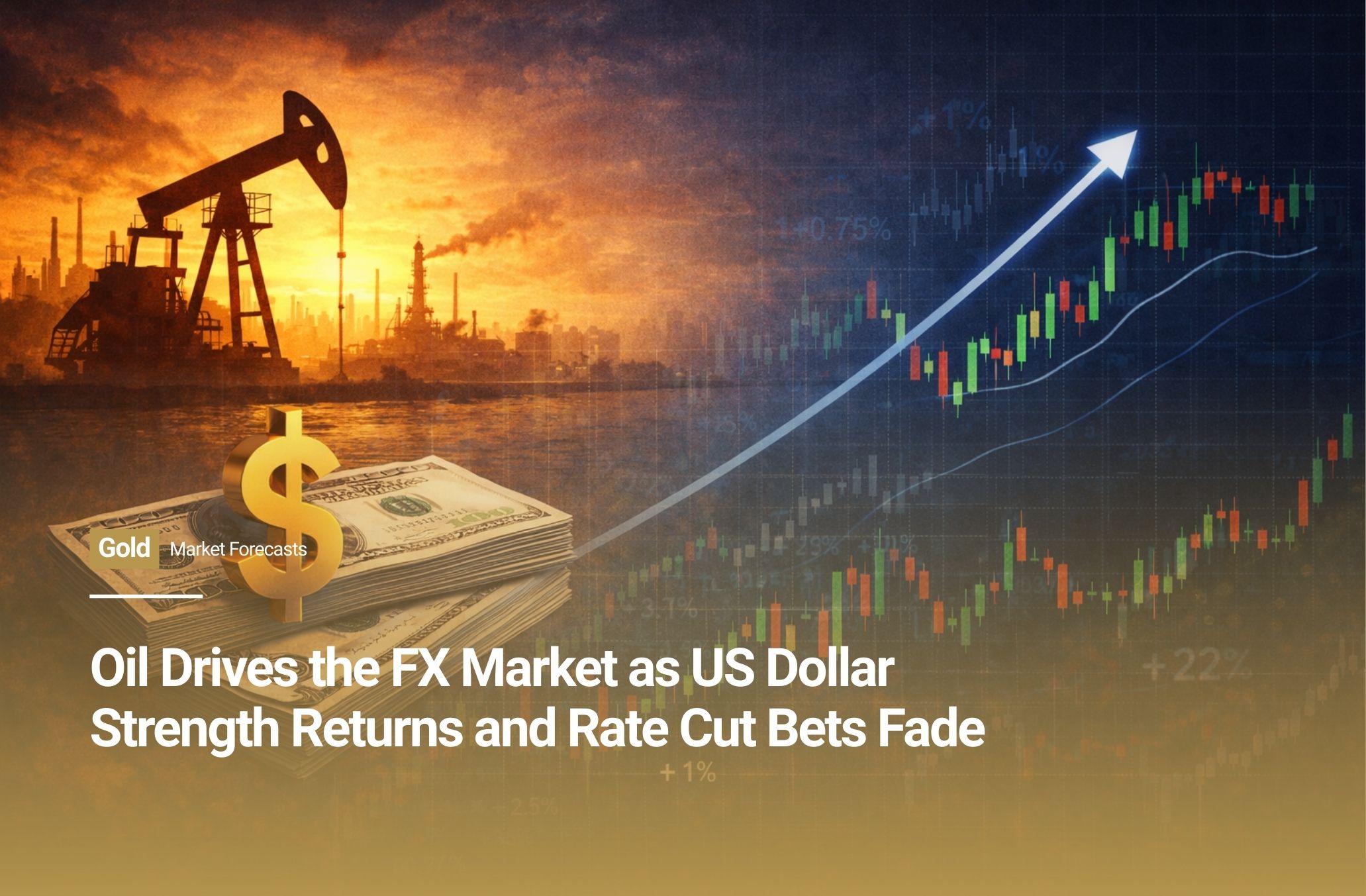
Currency markets are not trading currencies right now. They are trading . And when oil takes the steering wheel, the entire FX complex becomes little more than passengers gripping the armrests.
The geopolitical shock radiating out of the Gulf has quietly rewritten the global rate narrative in a matter of days. Only a few weeks ago, markets were comfortably pencilling in two for 2026. That script has now been tossed overboard. Traders are no longer fully pricing even one cut this year. In Europe, the reversal has been even more dramatic. Where markets once debated easing, they are now pricing a July rate hike from the European Central Bank and assigning meaningful odds to another before year’s end. In other words, the entire policy outlook has pivoted not because a growth renaissance caused central banks to change their minds but because the oil market changed the inflation math.
Energy shocks have a peculiar way of doing that. They seep into the inflation pipeline like crude through a cracked hull. Yesterday’s benign print in the United States already feels like ancient history because gasoline prices are now pointing toward a renewed climb in headline inflation north of $3%. Bond traders have reacted accordingly. Two year swap rates in dollars have jumped roughly 25 basis points since the conflict erupted. The market may still leave a sliver of easing priced by December but that sliver looks more like hope than conviction.
That shift is what is quietly rebuilding the dollar’s throne.
The global equity rout triggered by surging crude has pulled capital back toward the greenback with surprising force. The ’s rally following the U.S. strikes on Iran has been a reminder of something markets occasionally forget during calmer times. When geopolitical risk flares, the dollar still functions as the financial world’s emergency generator. Every portfolio manager may complain about its dominance during peaceful markets but when volatility spikes they all reach for the same switch.
The reason is brutally simple. There is no credible alternative. In moments when oil is driving global volatility higher the United States suddenly looks less like a vulnerable consumer economy and more like the largest oil producer on earth. That subtle distinction matters enormously for currencies. Higher crude prices act like a tax on energy importers while cushioning the balance sheet of producers. The FX market quickly sorts the world into winners and losers.
Right now that divide is becoming painfully visible.
Japan sits squarely on the wrong side of the ledger. A country already dependent on imported energy suddenly finds itself staring at a crude shock layered on top of rising U.S. yields. That combination is kryptonite for the yen. edging toward 160 is not simply a speculative push. It reflects a structural pressure that the Ministry of Finance cannot easily counter. Intervention works best when markets are trading sentiment. It is far less effective when traders are responding to a macro force as relentless as energy costs and yield differentials moving in the same direction. When oil climbs, and U.S. yields rise at the same time, the bar for yen intervention becomes a mountain rather than a hurdle.
Europe faces a different but equally uncomfortable equation. The has begun behaving less like a reserve currency and more like a risk asset. When European equities slide under the weight of higher energy costs the currency tends to follow them lower like a shadow at dusk. Oil is effectively tightening financial conditions for the continent while draining growth expectations at the same time. In that environment, our 1.1400 euro target from yesterday is not some distant theoretical line on a chart. It is the logical extension of an economy facing higher imported energy bills while global investors run toward the safety of the dollar.
This is why the FX market currently feels less like a calm pricing mechanism and more like a hostage negotiation conducted in real time. Every new headline from the Gulf feeds directly into the oil price. Every move in oil feeds into yields and equities. And those two channels ultimately determine where currencies trade.
Until the market gains clarity on the duration of the supply disruption the foreign exchange complex will remain chained to the energy market’s mood swings. Traders can pretend they are analyzing currencies but in reality they are watching crude futures tick by tick.
For now the message from that tape is unambiguous. When oil holds the keys the dollar sits on the throne.
PCE Paradox: Even a Soft Print Still Stares $100 Oil in the Face
The inflation story now pivots toward tonight’s release in New York, but the setup is deeply asymmetric. On paper, strips out food and energy, which should make it the cleanest read of underlying inflation. Yet the irony hiding in plain sight is that the market is staring straight at $100 oil. That means even a good print risks being ignored, because traders assume the energy shock has not yet filtered through the PCI or data pipeline. In other words, the market treats a soft number as backward-looking while it treats a hot number as forward-looking. That is the asymmetry.
But what could turn into a Frantic Friday is if the number comes in hot alongside triple-digit crude, which could plant the faintest seed of rate-hike speculation further out on the curve. That is why the balance of risks leans one way. The upside surprise matters far more than the downside relief.
Goldman’s latest work underscores that dynamic. The bank’s commodity team expects to average around $98 through March and April before easing back toward the low seventies by late 2026. In a more severe scenario where flows through the Strait of Hormuz are disrupted for a month, they estimate Brent would average closer to $110 in the near term. Their rule of thumb is that a sustained 10 percent rise in oil prices adds roughly 0.2 percentage points to and about 0.04 percentage points to , while trimming GDP growth by around 0.1 percentage point. On that basis, Goldman has already lifted its December 2026 headline PCE forecast to 2.9 percent and nudged core PCE to 2.4 percent, while shaving growth expectations slightly and pencilling in a higher peak in unemployment.
So the macro chessboard is shifting beneath the surface, not so quietly. For now, the most hawkish outcome the market is entertaining would be the Federal Reserve removing its easing bias and shifting its median projection from one cut to none. But seasoned macro hands know that removing the easing bias is often the first domino before something more restrictive enters the conversation. When oil begins pushing inflation expectations higher, even an inflation gauge that technically excludes energy cannot fully escape its gravitational pull.
Expressing how I feel right now, normally as a major reversion player, leaning into that trade today feels like trying to grab a parachute after already jumping.